
Finding termites in Mesa, AZ, can feel scary, especially if you see mud tubes, piles of wings, or changes in the wood around your home. Due to warm temperatures and steady termite activity, many Arizona neighborhoods face persistent termite pressure. If you catch these signs early, you can prevent structural damage and avoid costly repairs.
Homeowners in Mesa, Gilbert, Chandler, and nearby areas often deal with subterranean termites because irrigation, soil conditions, and warm weather support large colonies. Once termites enter a Mesa home, they remain active year-round.
This guide helps you identify termites, learn what causes them, manage a termite problem, and decide when you need termite control in Mesa, AZ, from a local expert.
Key Takeaways
- Mesa’s climate supports strong termite activity
- Subterranean termites are the most common termite species in the area
- Early identification prevents advanced termite damage
- Professional termite control offers long-term termite protection
Video: How to Identify Termites | Pest Control
This video shows clear examples of termite wings, damaged wood, and mud tubes so you can compare them to what you see at home. It walks you through common signs of termite activity and shows how termites behave inside walls. These visual examples help homeowners spot early signs and act quickly.
How Do I Identify Termites in Mesa, AZ?
Identifying termites in Mesa, AZ, starts with looking for visual traits, behavior patterns, and activity around wood structures. Termite identification in Arizona typically focuses on distinguishing ants from termites, especially during swarm season.
Termites in your Arizona home often stay hidden, so checking key areas helps you catch issues before major termite damage develops.
Visual identification traits
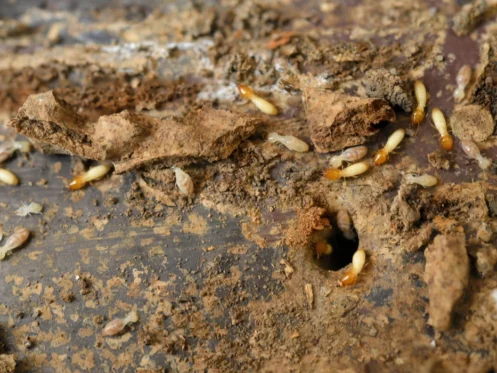
Subterranean termites have pale bodies, straight antennae, and equal-length wings during swarm season. Wing piles around windows or sliding doors are a common sign of a termite infestation. Drywood termites produce small droppings that look like grains of sand, although they appear less often in Mesa.
Behavioral identification traits
Termites stay in dark spaces and avoid dry air. Subterranean termites in Arizona create mud tubes on block walls, foundations, and pipes. These tubes help them reach wood structures safely. Busy termite colonies work nonstop, so you may notice hollow-sounding areas when tapping on wood.
Where you’re most likely to see them in Mesa, AZ
Indoors, look for soft baseboards, peeling paint, or tiny exit holes.
Outdoors, check fence posts, foundation edges, decorative borders, and spots where irrigation water collects. Mud tubes often appear in shaded or damp soil, especially near landscaping in East Mesa and Gilbert.
What Causes Termite Problems in Mesa, AZ?
Termite problems in Mesa, AZ, are driven by climate, moisture, soil conditions, and home construction. Many Mesa termite issues begin with moisture around the foundation. Long, warm seasons keep termite colonies active year-round, and irrigation-moist soil supports large populations. These factors increase the chance of future infestations.
Homes with wood in contact with soil or with older construction are at higher risk of termite damage. Even small cracks in slab foundations let termites enter and reach wood. Irrigation patterns around yards create damp soil that attracts termites and supports colony growth.
Seasonal changes also affect how active termites are. Winged swarmers are most prevalent in spring, but underground foraging continues year-round.
New construction across Mesa disturbs the soil and can shift termite colonies into nearby neighborhoods.
How Do You Manage Termites in Mesa, AZ?
To manage termites in Mesa, AZ, reduce moisture, check for entry points, and improve soil and foundation conditions around your home. Addressing these areas reduces the risk of future infestations and makes your home less attractive to termites.
Reducing moisture is one of the most effective preventive measures for stopping termites. Repair leaks, adjust irrigation schedules, and keep soil from touching wood on your home. Homeowners should also fix drainage problems and remove rotting wood around the foundation.
Seal entry points around pipes, cracks, and gaps to keep foraging termites out.
Your yard also plays a big role in termite control. Keep space between soil and wood, trim bushes away from walls, and avoid landscaping that traps moisture against the house.
These steps reduce pest problems and give your home better long-term protection.
How Do You Treat Termites in Your Mesa, AZ Home?
Treating termites in your Mesa home depends on the severity of the infestation and the location of the colonies. Many homeowners try DIY methods first, but professional termite control services and other pest control services typically deliver more reliable, longer-lasting results.
DIY treatment options
DIY options include reducing moisture, scraping away small mud tubes, and replacing damaged wood. These steps may slow termite activity, but they rarely get rid of underground termite colonies. A homeowner can clean affected areas and watch for changes, but DIY methods do not stop termites from living in the soil.
Professional treatment options
During a professional termite inspection, our technician checks the home, foundation, attic, and yard. Specialists look for mud tubes, droppings, termite colonies, and damaged or weak wood.
We then apply termite treatments that target colonies and reach their underground tunnels. Professionals return for follow-up visits and ongoing monitoring to help prevent future infestations.
Because subterranean termites are active year-round, professional help provides better protection than DIY efforts. The combination of a thorough inspection, targeted soil treatments, and ongoing monitoring helps keep your home protected from termites and supports a more pest-free home.
Should I Call a Professional for Termites in Mesa, AZ?
Call a professional if you see mud tubes, piles of wings, hollow wood, or recurring termite activity. Large or widespread infestations require careful identification, and pest control companies use years of experience to identify them accurately.
If several rooms show signs of termite damage, it is important to act quickly. Homes in Mesa and surrounding areas often require year-round pest management due to the warm climate.
When you work with a family-owned local team, you get help from professionals who understand termite activity in your neighborhood. Their local knowledge and hands-on approach give you stronger termite protection and better long-term results.
Making the Right Termite Control Decision for Your Mesa, AZ Home
Homeowners in Mesa face persistent termite pressure due to warm weather, soil conditions, and irrigation. Understanding how termites live and move helps you spot early signs and protect your home. By recognizing the signs of termites, controlling moisture, and investing in reliable treatment, you can keep your home safer in the long term.
At Green Home Pest Control, we offer effective pest control solutions for termites in Mesa, AZ, through targeted treatment plans, thorough inspections, and child- and pet-safe products.
If you want strong protection for your Mesa home, contact us today or request a free quote to stop termite activity now and help prevent future infestations.
FAQs
Are termites active year-round in Mesa?
Yes. Mesa’s warm climate allows termite colonies to stay active year-round. Subterranean termites continue to feed in the soil even during the cooler months, making continuous monitoring important for homeowners across the East Valley.
How do I know if I’m dealing with termites?
Look for mud tubes, wing piles, droppings, hollow-sounding wood, or bubbling paint. These signs often indicate subterranean termite activity. If you cannot identify the source, a thorough inspection from a local professional can confirm the problem.
What’s the fastest way to get rid of termites in my home?
The fastest and most reliable method is professional termite treatment. Experts identify termite species, locate colony sources, and apply effective treatments to eliminate active colonies. Their targeted approach stops damage quickly and reduces the risk of future infestations.



 21 years of pest control experience
 Founder and Owner of Green Home Pest Control
 13 year resident of Arizona