

Wasp control inspection
We check eaves, patios, block walls, and landscaping to locate nests and flight paths. Then we explain the findings and outline a plan for your property.
Get fast wasp control in Phoenix from our local team. Book today for a quick visit, clear pricing, and re-treat options if activity returns.

“I’ve used Green Home for about 4 years in my old home and moved them with me to my current home. As a 7 year customer, I appreciate GH’s communication, flexibility and most importantly, the professionalism and consideration of their technicians.”
 Mira
Mira
We start by spotting where wasps are active and where they’re nesting. Then we treat the site and remove or knock down accessible nests. We also address entry points and harborage areas to help prevent a return.
We check eaves, patios, block walls, and landscaping to locate nests and flight paths. Then we explain the findings and outline a plan for your property.
Or call for same-day service

After over a decade of serving Tucson, we understand how to treat the region’s unique pest challenges.

A small, family-owned business, offering friendly, reliable service you can count on.

We treat inside daycares & hospitals – that’s how kid, pet, and eco-friendly our process is.

Our expert pest protection plan ensures pests stay gone—or we come back for free.
Phoenix homeowners call us when stinging insects show up around patios, eaves, and play areas. Our local AZ team shows up on time, with simple scheduling and a clear 2-hour arrival window. We treat problem spots, share what we found, and send a service report so you know what was done. If activity continues, we schedule a follow-up and offer a re-treat option when needed. Families like our kid and pet friendly approach and the fact that our staff lives right here in the Valley.
 Rob Wagley
We are very pleased with this pest control service. Our technician, Jay was very informative and sensitive to where he treated. We have dogs, birds and even wildlife that he was careful to protect. We haven’t seen any scorpions, fleas or black widows on our 1 acre + property since Jays campaign. Well done sir. I highly recommend Jay as a green beret bug and pest man.
 Margaret Penning
We just had Chris do our pest treatment, and he did a great job. We are regular users of Green Home Pest, and they’re easy to work with. They schedule the appointment, reschedule is easy if we have conflicts, they let you know who’s coming and when they’re on their way. Great company with great employees.
 Miranda
Green Home has great customer service. Chris came on time, was very friendly and helpful. He did an inspection and completed his work efficiently. I definitely recommend them
We locate the active nest site, then treat it directly using products labeled for wasps and hornets. When the nest is reachable, we remove it or knock it down after activity drops. This method fits most Phoenix homes where nests form under eaves, patio covers, and around block walls. You’ll see fewer flights quickly, but some stragglers can return to the area for a short time. We’ll tell you what to watch for and where to avoid until the site is quiet.
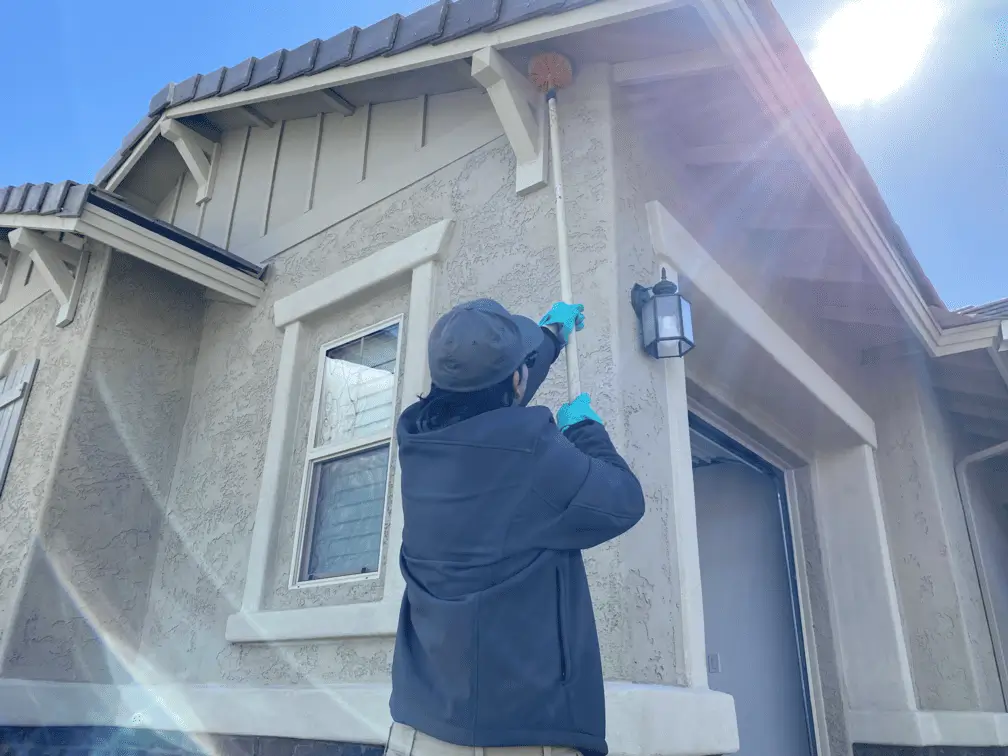
After the nest is handled, we treat common landing zones like eaves, corners, soffits, and nearby foliage to cut down on rebuilding. We also target cracks, crevices, and access points where stinging insects rest during the day. This approach works well in desert conditions where shade and water sources pull insects close to structures. Expect the exterior to stay calmer over the following weeks, especially around patios and entry doors. If we spot conditions that attract activity, we’ll point them out so you can correct them.

Many Phoenix properties see waves of wasp activity as temperatures rise and food sources change. A seasonal plan keeps pressure on problem areas with routine exterior treatments and quick scheduling when new nests pop up. We pay extra attention to eaves up to 25 feet, patio structures, and landscaping within five feet of the home. Visits are built around a 2-hour window and you get notes after each service. This option is a good fit for families and businesses that want fewer surprises during the warm months.
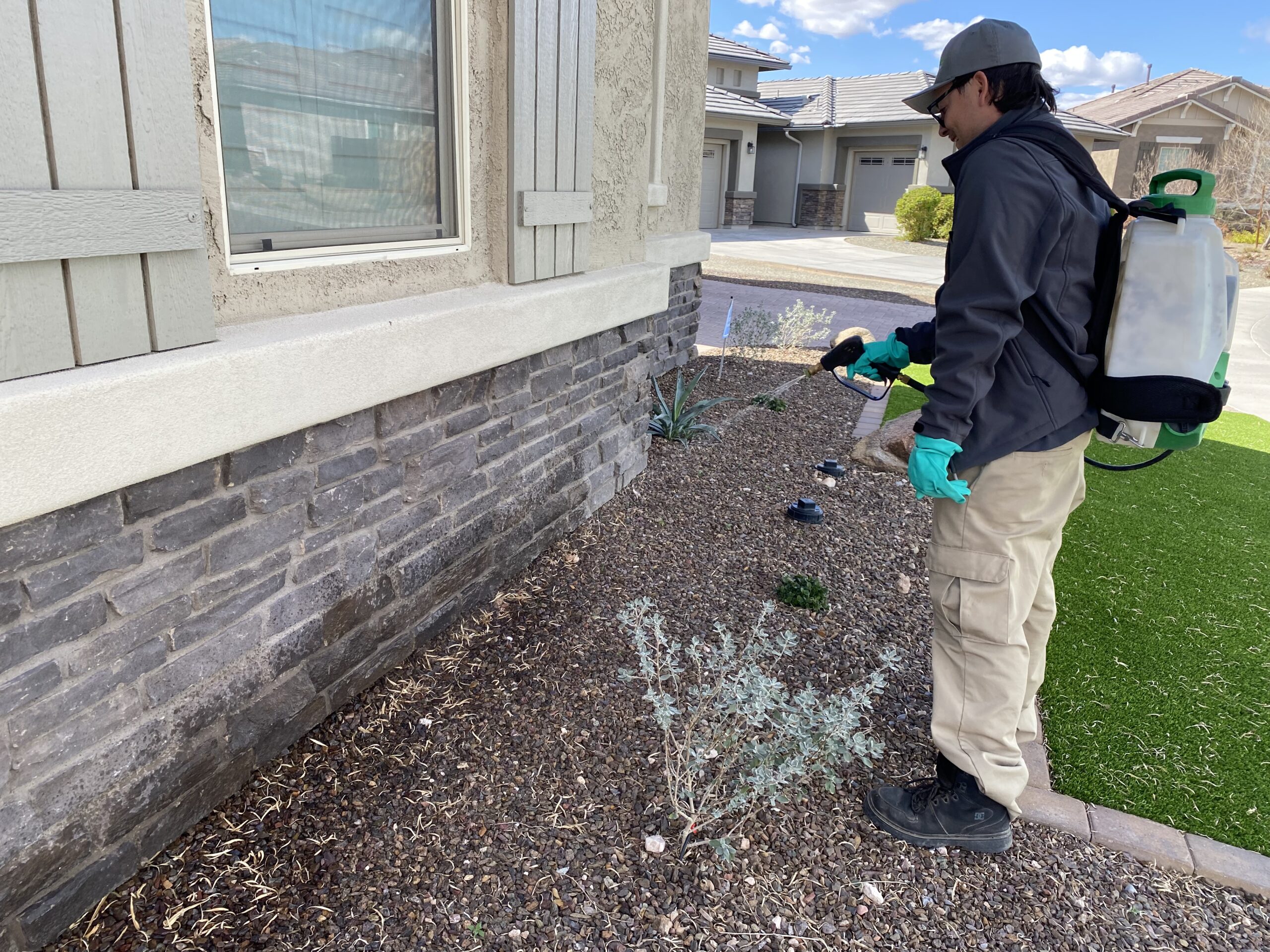
Every Phoenix property is different, so we adjust wasp control to your layout, traffic areas, and where nests keep forming. We service single-family homes, rentals, restaurants, offices, and HOA common areas. Expect clear communication, tight scheduling, and follow-ups when needed, plus notes after each visit so you know what changed.

Wasp control at home starts with finding nests around eaves, patio covers, block walls, and landscaping near entry doors. We treat active sites and reduce the chance of rebuilding by focusing on the places wasps land and travel. You’ll get guidance on keeping kids and pets away from the work area until it settles, plus a re-treat option if you keep seeing activity.
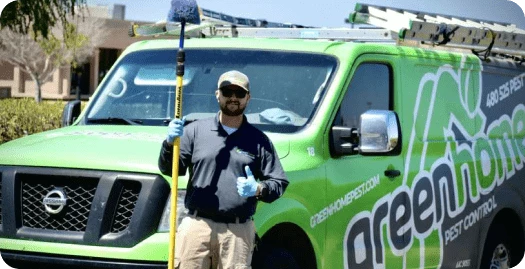
For businesses, wasp control focuses on keeping customers and staff away from stinging insects near entrances, dumpsters, loading areas, and patios. We inspect high-traffic zones, treat nests, and apply exterior treatments that help cut down on repeat activity. Scheduling is simple, with a 2-hour window, quick communication, and service notes you can file for your records.

Get total home protection starting at $49 per month. Don’t wait for a problem to happen. Protect your home with our professional and affordable pest control plan for one low monthly price.

4 services per year. 365-day coverage. Our quarterly treatments ensure your home stays pest-free all year long.

No limits. No hidden fees. Need extra help? We’ll return as often as needed—free of charge.

Certified by Arizona’s Department of Agriculture and background-checked for your peace of mind.

A thorough, proven process covering every inch of your home to eliminate pests.

99.9% on-time service with technicians who track every minute spent treating your home.

Avoid $3,000 in repair costs with a free $228 year-round termite protection plan.¹
Or call for same-day service
We handle wasp control for Phoenix homes and businesses, from small nests to recurring seasonal activity. Desert heat and irrigation can drive insects to shaded eaves and entry points. Call us for fast scheduling and a tight arrival window.
Nearest Location:
16042 N 32nd St Ste B13, Phoenix, AZ 85032
See all service areas we coverPaper wasps are among the most common wasps found around Arizona homes and businesses. Yellow paper wasps, Navajo paper wasps, and Arizona paper wasps are all encountered in the region, along with yellowjackets, mud daubers, cicada killers, and several other wasp species.
Paper wasps commonly build exposed, umbrella-shaped nests beneath eaves, patio covers, railings, sheds, and other shaded exterior surfaces. Their nests have visible cells and are usually attached by a narrow stalk.
Mud daubers create individual mud tubes rather than open paper combs. Yellowjackets may nest underground or inside protected structural areas, while cicada killers commonly use burrows in sunny soil.
Correct identification matters because each wasp has different nesting habits and defensive behavior. Nest shape is helpful, but technicians may also consider the insect’s appearance, flight pattern, location, and whether several wasps are repeatedly returning to the same area.
Our guide to Arizona stinging insect identification provides more information about wasps, hornets, bees, and other flying pests.
A wasp problem is easier to control when the active nest or entry point can be located and treated directly. Social wasps repeatedly return to the same colony, which creates a predictable flight path that can help a technician identify the source.
Spraying unrelated areas where individual wasps happen to fly may reduce a few visible insects without affecting the colony. The nest may be under an eave, inside a roofline or wall gap, within dense landscaping, beneath a patio structure, or in another sheltered location.
Temperature and time of day can affect how many wasps are visible, but those factors do not make a nest safe to approach. Wasps may become defensive when the colony is disturbed, even when the area initially appears quiet.
Reducing food residue, open trash, standing water, and protected nesting sites may make the property less attractive. Once an active social wasp colony is established, however, treatment usually needs to focus on the nest or structural entrance.
The fastest dependable approach is to identify and treat the active nest or entry point rather than spraying individual wasps. The time required depends on the species, nest location, size of the colony, and accessibility.
An exposed paper wasp nest beneath a low eave may be more straightforward to address than a colony inside a wall void, roofline opening, dense shrub, or elevated patio structure. Concealed nests may require treatment at the entrance rather than physical removal of all nest material.
Swatting wasps, repeatedly spraying open areas, or sealing an entrance before treatment can make the situation more difficult. Closing an active structural opening may cause wasps to search for another exit, potentially leading them farther into the building.
After treatment, a small number of foraging wasps may briefly return to the former nesting area. The technician should explain what to expect, how long to avoid the location, and when follow-up may be appropriate.
For nests near doors, walkways, patios, play spaces, or other frequently used areas, professional service provides a more controlled way to locate and treat the source.
Professionals first identify the insect and locate the active nest or structural entrance before choosing a treatment method. Paper wasps, yellow jackets, mud daubers, hornets, and bees should not all be handled the same way.
A technician may inspect eaves, soffits, patio covers, block walls, roofline gaps, landscaping, sheds, utility openings, and other areas where repeated flights have been observed. Protective equipment and application methods are selected based on the species, access, and nest location.
Exposed nests may be treated and removed or knocked down after wasp presence has decreased. When a colony is concealed inside a wall, roof void, or other inaccessible space, treatment may focus on the active entry point and surrounding landing area rather than opening the structure to physically remove the nest.
Professionals may also identify sheltered locations where future nests could form and explain when cracks or openings may be repaired. Active entrances should not be sealed until treatment has been completed and the appropriate timing has been confirmed.
A wasp nest removal visit includes an inspection, identification of the active nest or entry point, targeted treatment, and an explanation of what to expect afterward.
The technician will ask where wasps have been seen, how long the problem has been present, and whether a nest is visible. The inspection may include eaves, patio covers, block walls, shaded corners, landscaping, sheds, roofline openings, and other places connected to the repeated flight path.
If an accessible nest is found, it may be treated and removed or knocked down once wasp presence has decreased. Concealed or unsafe-to-reach nests may require treatment around the structural entrance without physical removal of the nest material.
People and pets should remain away from the work area during treatment and for any period specified by the technician. A few returning wasps may circle the former nest location briefly after service.
Green Home Pest Control provides service notes so customers know what was treated and what changes may help reduce future nesting. If wasps continue returning, the next step will depend on the nest location, treatment performed, and applicable service terms.
Precautions depend on the product, application method, nest location, and label instructions. Tell the technician about children, pets, aquariums, play areas, and any outdoor spaces that require special care before service begins.
Green Home Pest Control uses focused applications at active nests, entry points, and relevant exterior areas rather than treating unrelated parts of the property. Products are selected and applied according to their labels, which determine placement, amount, drying time, and any access restrictions.
People and pets should not touch treated nests, wet surfaces, or areas the technician has asked them to avoid. Outdoor weather, the type of application, and the nest location can affect how long the area should remain unused.
A product should not be considered risk-free simply because it is used around a home. Proper application and customer preparation both matter. Anyone with a specific medical concern should consult a qualified healthcare professional and let the pest control team know about the concern before treatment.
Call a wasp exterminator when the nest is difficult to reach, close to people, hidden inside a structure, or causing repeated defensive behavior.
Professional service is especially appropriate when:
Anyone with a known severe sting allergy should avoid the area and follow the emergency plan provided by their healthcare professional.
Do not seal an opening while wasps are actively using it. The colony should be treated first, and structural repairs should occur only after the technician confirms that the entrance is no longer active.
Schedule a free wasp control quote with Green Home Pest Control if the nest is active, recurring, or difficult to approach safely.
"*" indicates required fields