What Phoenix Homeowners Should Know About the Most Painful Sting
Author: Jonathan Anderson

Protect your home and family from ants, spiders, scorpions, rodents, and other Tucson pests.
What deters flies? The most reliable answer is not one scent, spray, or countertop trick. Flies become less likely to settle around an Arizona home when they cannot reach food residue, moist organic material, standing water, open trash containers, or easy entry points.
A small trap may help reduce visible activity. A scented product may make one area less appealing temporarily. However, flies usually return when the breeding source remains available.
The right response depends on the type of fly. House flies, fruit flies, and drain flies do not gather for the same reasons, so the first step is to identify where the activity is concentrated.
The University of Arizona Cooperative Extension’s guide to common household flies and prevention places prevention at the center of fly management. The practical steps are straightforward: clean food-preparation areas, cover food, close trash containers, rinse recyclables, repair screens, clean drains, fix leaks, and remove pet waste.
These measures work because they reduce the things flies need to remain active:
This approach is more dependable than spraying the air or placing a strong-smelling product near one doorway.
The EPA’s integrated pest-management principles follow the same logic. Identify the pest first, prevent access when possible, and use targeted control only when preventive measures are not enough.
The word “fly” covers many insects. A method that helps reduce fruit flies in a kitchen may do little for house flies entering through a damaged screen or drain flies developing inside a plumbing fixture.
The University of Arizona’s fly-management guidance explains that correct identification influences the management plan because different flies have different needs and behaviors.
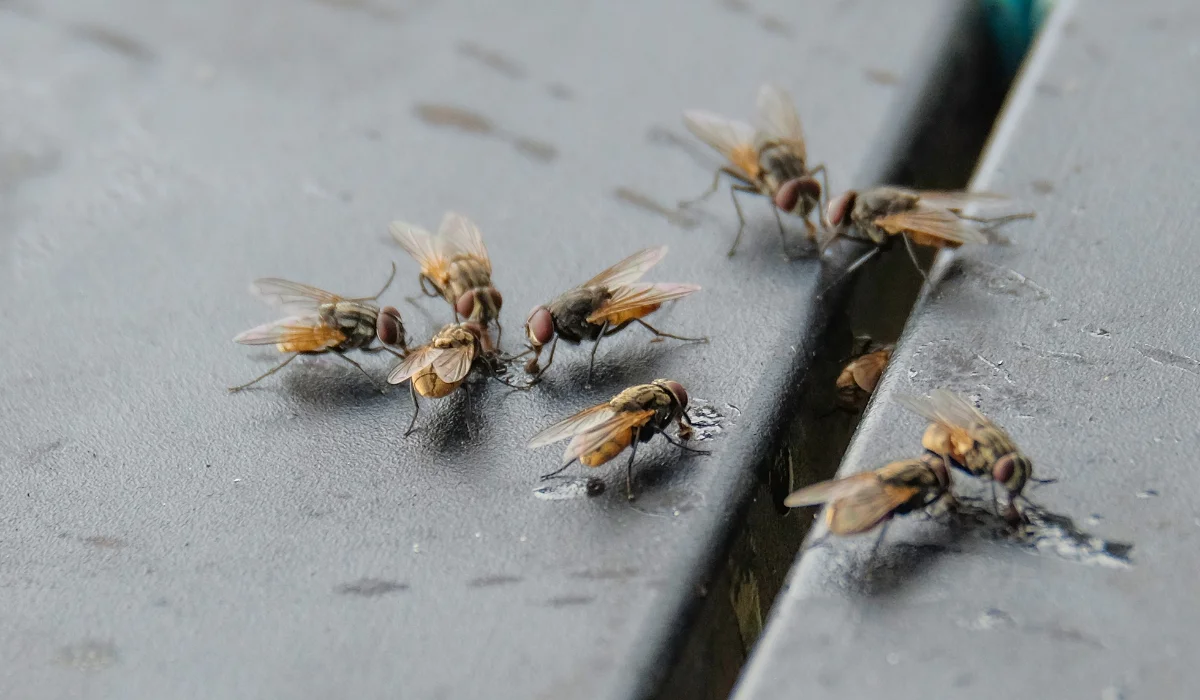
House flies are larger and more noticeable than fruit flies or drain flies. The University of Arizona identifies the adult common house fly by four dark stripes on the middle section of its body.
These flies often gather around exposed food, garbage, animal waste, and decaying organic material. They may enter through open doors, torn screens, or exterior gaps.
To deter house flies:
A sticky fly trap may catch some adults, but it will not solve an outdoor source or a damaged screen.
Fruit flies are small and often appear near ripening produce, sweet drinks, recycling containers, and food waste. They may also gather near moist organic material.
To deter fruit flies, remove the source first. Store produce appropriately, clean sticky spills, rinse recyclable containers, and empty kitchen trash before residue builds up.
A simple vinegar trap may help catch adult fruit flies. Green Home Pest Control’s guide to eco-conscious pest-control methods describes an apple-cider-vinegar and dish-soap trap for this purpose.
The trap attracts flies rather than repelling them. It works best as a support measure after the kitchen has been cleaned.
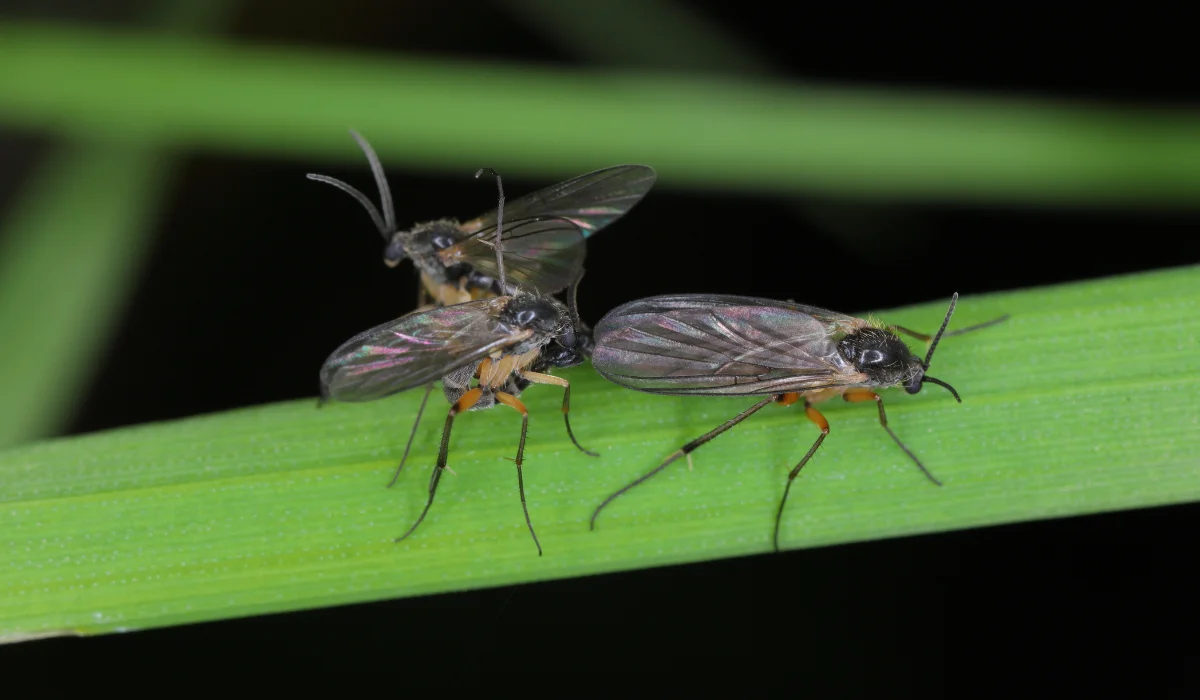
Drain flies, also called moth flies, are small, fuzzy insects often found close to sinks, showers, floor drains, and other damp areas.
The University of Arizona notes that their larvae can develop in wet or damp locations with decaying organic material. Green Home Pest Control’s guide to drain fly infestations in Arizona explains why recurring activity near a fixture requires attention to the drain itself.
To deter drain flies:
Killing the adult flies near the sink will not resolve larvae developing in the buildup below the surface.
Homeowners often search for a scent that will keep flies away. Mint, basil, citrus, peppermint, eucalyptus, and other strong-smelling plants or oils are commonly suggested.
These options may help make a small area less attractive for a limited time. They should not be treated as a complete fly-control strategy.
A scent cannot:
If you use a scented product, treat it as an optional supplement after addressing the source. Avoid spraying concentrated oils on food-preparation surfaces, pet areas, bedding, or skin unless the product is designed and labeled for that use.
Green Home Pest Control’s guide to fly control in Arizona kitchens also recommends pairing any natural deterrent with cleaning, drain maintenance, and entry-point repairs.
Air movement may make it harder for some flies to land in a small, targeted area, such as an outdoor dining table or patio seating zone. However, a fan does not remove the conditions attracting flies to the property.
Use air movement as a comfort measure rather than a full control plan. If flies continue gathering around the same patio or doorway, inspect nearby trash containers, pet areas, standing water, grills, and compost bins.
A kitchen gives flies access to food, moisture, and shelter. Small cleanup habits can make a noticeable difference.
Start with the areas that collect residue easily:
Clean sticky residue from bottles and cans before recycling them. Store food in sealed containers and avoid leaving dirty dishes overnight.
The University of Arizona recommends cleaning clogged sinks and drain pipes periodically. Organic buildup inside drains may need an enzymatic or bacterial drain cleaner, followed by hot water. Thick deposits may require manual cleaning with a stiff brush.
Avoid mixing household cleaners. Use one product at a time and follow its instructions.
Outdoor fly activity often begins with an attractant close to the home. A trash bin beside a door, exposed food scraps in compost, pet waste, or water collecting in a container can keep flies active near entrances.
Green Home Pest Control’s guide to reducing fly activity around Phoenix homes recommends checking outdoor water sources, food attractants, and gaps around the structure.
Inspect:
After rain, empty containers that hold water. Keep lids closed on trash and compost bins. Rinse containers before placing them in recycling.
If you compost at home, Green Home Pest Control’s guide to keeping pests out of compost bins explains how tight-fitting lids, airflow, and balanced materials can reduce odors and discourage fly activity.
Flies do not need a large opening to enter a home. A torn screen, worn door sweep, or frequently open garage door can provide access even when the kitchen is clean.
Inspect:
The University of Arizona recommends keeping doors and windows closed and using intact screens to reduce the number of flies entering from outdoors.
Exclusion will not remove flies already developing indoors, but it can reduce new activity.
Fly traps can help when they match the pest and location.
Sticky traps may reduce adult house flies in selected areas. Vinegar traps may catch fruit flies near a kitchen source. Traps can also help you monitor whether activity is improving after cleaning.
However, traps should support a broader plan rather than replace it.
Green Home Pest Control’s guide to DIY versus professional pest control uses flies as an example of why treating visible insects does not always resolve the source. Fly strips and traps may reduce what you see indoors while flies continue entering or developing elsewhere.
Avoid turning a small fly issue into a safety problem.
Do not mix household cleaners or spray bleach, ammonia, or cleaning products into the air as repellents. Do not apply outdoor pesticides inside the home.
The EPA’s pest-control safety guidance advises homeowners to try prevention first, follow pesticide labels, avoid using outdoor chemicals indoors, and avoid assuming that more product will work better.
If you use a store-bought pesticide:
A targeted product can be useful in some situations. Improvised chemical use is not a substitute for identification and source control.
Flies often return because one source remains overlooked.
A recurring issue may come from:
Start in the room where activity is strongest and follow the pattern. Drain flies near a bathroom wall, fruit flies around a counter, and house flies entering near a patio door point to different solutions.
A small fruit-fly issue may improve after you remove the food source and clean the area. A few house flies may stop appearing once a screen is repaired.
Professional support makes sense when:
Green Home Pest Control provides residential pest-control services in Arizona that begin with an inspection of the property and the conditions allowing pests to remain active.
For fly problems, the inspection may focus on drains, kitchens, trash areas, outdoor attractants, moisture sources, and entry points. The next step depends on the species and the location of the source.
What deters flies most effectively is a home with fewer food sources, less moisture, cleaner drains, closed trash bins, and fewer entry points.
If flies keep returning after you address the likely attractants, request a free quote from Green Home Pest Control to schedule an Arizona pest inspection and receive recommendations based on the activity found around your property.
Strong scents such as mint, citrus, or peppermint may make a small area less attractive temporarily. No single scent reliably solves a fly problem when food, moisture, or a breeding source remains available.
Apple cider vinegar attracts certain flies rather than repelling them. A vinegar trap may catch fruit flies, but it will not stop house flies or remove larvae developing in a drain.
Flies may enter through torn screens, gaps around doors, vents, or frequently open entrances. They may also find residue inside drains, recycling bins, trash containers, or hidden areas beneath appliances.
Keep outdoor trash containers closed, remove pet waste, clean grills, avoid leaving food outside, empty standing water, and check nearby doors and screens. Air movement may help around a seating area, but it does not replace source control.
Request an inspection when flies appear daily, activity spreads into several rooms, drain flies keep returning, or sanitation and exclusion steps do not resolve the problem.

Serving Arizona since 2012

Pest-free guarantee

Small, local business



"*" indicates required fields