What Phoenix Homeowners Should Know About the Most Painful Sting
Author: Jonathan Anderson

Protect your home and family from ants, spiders, scorpions, rodents, and other Tucson pests.
Controlling roaches in Arizona homes requires more than spraying the insects you happen to see. Cockroaches can hide behind appliances, inside cabinets, near plumbing, and in small gaps around a home. Some species also enter through exterior openings, sewer lines, cardboard boxes, and stored items.
A successful plan starts with identifying the type of roach, locating the areas where activity is concentrated, and reducing access to food, water, and hiding places. Targeted treatment can then focus on the spaces where roaches live and travel.
The first goal is not to treat every surface. It is to understand why the roaches are present and remove the conditions that allow the activity to continue.
Roaches look for food, water, and shelter. Arizona’s dry conditions do not prevent infestations when these resources are available inside or around a property.
The University of Arizona Cooperative Extension’s guide to pest-proofing Arizona homes explains that cockroaches may enter through loose-fitting doors and windows, gaps around pipes and electrical lines, and sewer lines. They can also arrive inside cardboard boxes, dried pet food, and seasoned firewood.
Finding roaches does not automatically mean that a home is dirty. The National Pesticide Information Center notes that cockroaches can find enough food and water to survive even in regularly cleaned homes.
A few overlooked conditions can give them what they need:
The most effective response combines sanitation, repairs, exclusion, monitoring, and targeted treatment.
Correct identification matters because different cockroach species behave differently. Some tend to live indoors near kitchens and bathrooms. Others are more likely to move inside from outdoor areas, utility spaces, or sewer systems.
The University of Arizona Cooperative Extension’s cockroach guide reports that at least 20 cockroach species have been found in Arizona. Several introduced species are established in urban areas, including American, German, brown-banded, Oriental, Surinam, Turkestan, and field cockroaches.
American cockroaches are sometimes called sewer roaches. They are among the larger roaches found in Arizona and may appear near drains, plumbing areas, garages, and exterior entry points.
A large roach entering from outside does not always mean that a colony is living in the kitchen. However, recurring activity deserves attention, especially when insects appear near drains or utility areas.
German cockroaches are smaller and commonly associated with indoor infestations. They often hide in kitchens, bathrooms, cabinets, and appliance areas where food and moisture are available.
This species can be difficult to control without a focused plan. The University of Arizona recommends professional support for challenging species such as German and brown-banded cockroaches because targeted baiting may be needed.
Brown-banded cockroaches can hide in areas beyond kitchens and bathrooms. Their activity may appear in furniture, cabinets, and rooms where moisture is less obvious.
Because the hiding areas differ by species, treating only the kitchen may leave part of the problem untouched.
Seeing a live roach is the most obvious sign, but it is not the only clue. Roaches often remain hidden during the day and become more active at night.
Look for physical evidence around cabinets, appliances, sinks, and storage areas:
Daytime sightings also matter. The University of Arizona notes that roaches seen during daylight may have been disturbed from a hiding place or may be part of a heavier infestation.
Do not panic after seeing one roach. Instead, note where and when it appeared. Repeated sightings in the same area can help identify a hotspot.
Start with warm, dark spaces close to food and water. A flashlight can help reveal droppings, egg cases, or live insects in narrow areas.
Check beneath the sink, behind the refrigerator, around the stove, inside lower cabinets, and near pantry shelves. Pay attention to grease buildup and food particles that may collect beneath appliances.
Dry pet food also deserves attention. Store it in a sealed container and avoid leaving uneaten food in a bowl overnight.
Inspect cabinets beneath sinks, pipe openings, drains, and areas near washing machines. A slow leak or moisture buildup can make these rooms more attractive to roaches.
Cardboard boxes, paper stacks, stored firewood, and clutter create hiding places. Move stored items off the floor when possible and replace damaged cardboard containers with sealed bins.
Look for gaps around exterior doors, window frames, air-conditioning lines, and plumbing penetrations. Roaches can use small openings to move inside.
Roach control works best when each step supports the next. Cleaning alone may not solve an established infestation, but treatment is less effective when food, water, and hiding places remain readily available.
Start with the places where residue tends to build up unnoticed. Clean beneath appliances, wipe grease from cooking areas, and empty trash regularly.
Use sealed containers for pantry goods and pet food. Rinse recyclable cans and bottles before storing them. Avoid leaving dirty dishes or uncovered food out overnight.
These habits make the home less attractive to roaches and support the effectiveness of a treatment plan.
Repair plumbing leaks and check the areas around sinks, appliances, and irrigation connections. Dry wet surfaces and avoid leaving standing water in indoor areas.
Water access matters because many roach species prefer humid spaces. A small leak beneath a sink may be enough to sustain activity in a cabinet or wall void.
Clear paper piles, unused boxes, and clutter from kitchens, garages, laundry rooms, and storage spaces. Keep firewood outdoors and away from entry points.
Reducing clutter does not eliminate roaches on its own. It makes inspection easier and removes some of the protected spaces where they can hide.
Check doors, windows, baseboards, exterior walls, and openings around pipes or utility lines. Repair damaged screens and replace worn door sweeps when needed.
Seal obvious gaps after assessing the activity. In some cases, roaches may be moving between indoor and outdoor areas through multiple entry points.
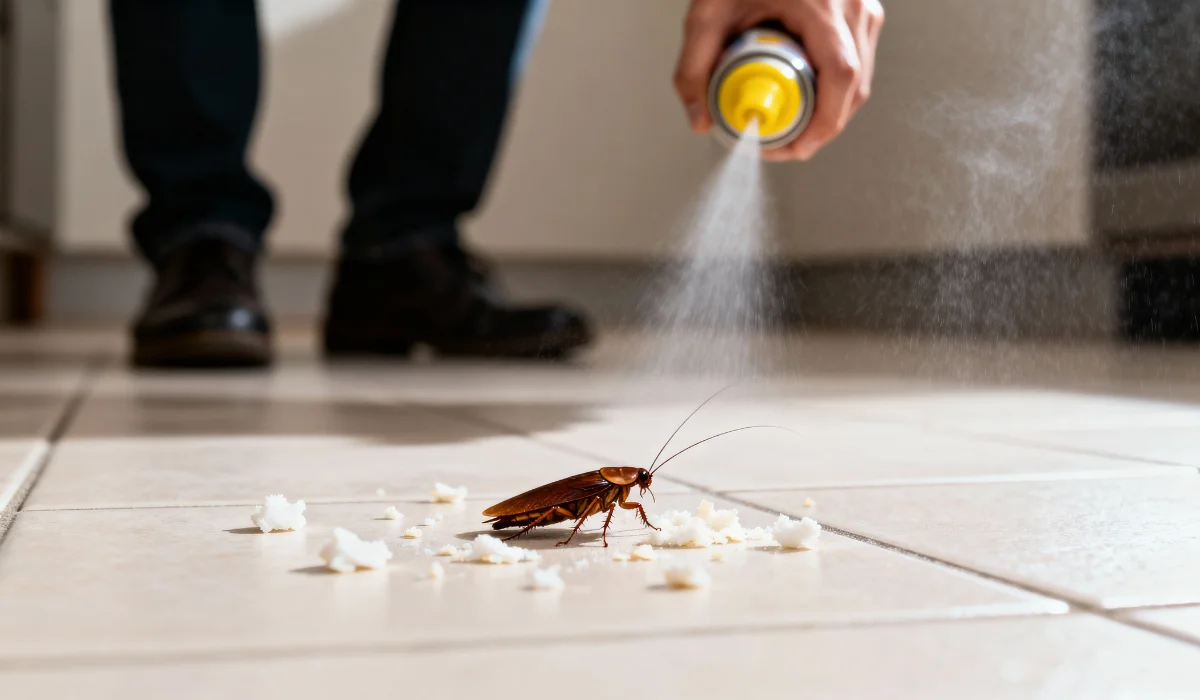
Avoid treating roaches as a surface-only problem. Spraying a visible insect may provide an immediate result without reaching the hidden population.
The University of Arizona’s American cockroach guidance explains that baits can be effective when placed near harborages and foraging areas. The same resource notes that sprays can interfere with bait performance.
Green Home Pest Control’s cockroach-control service begins with an inspection to identify droppings, harborages, likely entry points, and activity hotspots. Based on the findings, the team may use baits, gel stations, crack-and-crevice treatment, and follow-up visits.
Roaches spend much of their time hidden in protected areas. A spray may kill the insect crossing the floor without reaching egg cases or the spaces where other roaches are resting.
Overusing household sprays can also complicate a bait-based plan. Repellent products may push roaches away from treated areas or interfere with bait placement.
Avoid mixing products or applying pesticides in ways that conflict with the label. When activity continues, an inspection can help determine where treatment should be concentrated.
Cockroaches can contaminate food and surfaces. Their shed skins and waste may also contribute to allergy or asthma symptoms for some people.
The National Pesticide Information Center explains that people in an infested home or apartment may experience allergy and asthma symptoms after breathing in cockroach skin particles and waste.
Keep food preparation surfaces clean and address recurring activity promptly, especially when someone in the household has asthma or allergies.
A single outdoor roach that wanders into the garage may not require the same response as repeated indoor activity. Professional support makes sense when the signs point to an established infestation or when simple preventive steps are not enough.
Schedule an inspection when:
A professional inspection can help determine whether the activity is concentrated near plumbing, appliances, cabinets, exterior entry points, or another hidden area.
Green Home Pest Control provides cockroach-control services for Phoenix, Tucson, Mesa, Chandler, Gilbert, Scottsdale, and other Arizona communities listed on its service-area page.
The process begins with identifying active areas and the conditions drawing roaches into the property. The inspection may include kitchens, bathrooms, drains, plumbing areas, cabinets, appliances, and entry points.
Treatment is then matched to the layout and the level of activity. Depending on the inspection findings, the plan may include:
This approach focuses on the source of the problem rather than treating isolated sightings.
Controlling roaches becomes easier when the treatment plan addresses the places where they hide and the conditions that allow them to return.
If you continue to see roaches indoors, request a free quote from Green Home Pest Control to schedule an inspection and receive a treatment plan based on your home’s layout and activity level.
Roaches can survive in clean homes when they find small amounts of food, water, and shelter. Crumbs beneath appliances, pet food, leaks, boxes, and gaps around doors or pipes can support activity.
Not always. A roach may enter from outdoors, a garage, or a utility area. Repeated sightings, daytime activity, droppings, egg cases, or small roaches indoors provide stronger reasons to schedule an inspection.
Roaches often hide in dark, narrow spaces such as cabinet gaps, appliance areas, baseboards, plumbing openings, wall voids, and furniture joints.
Usually not. Sprays may kill visible roaches without reaching hidden activity. A broader plan may include sanitation, moisture control, exclusion, monitoring, targeted treatment, and follow-up service.
Call a professional when roaches continue to appear indoors, you find egg cases or droppings, daytime sightings become common, or you are unsure which species is present.

Serving Arizona since 2012

Pest-free guarantee

Small, local business



"*" indicates required fields