What Phoenix Homeowners Should Know About the Most Painful Sting
Author: Jonathan Anderson

Protect your home and family from ants, spiders, scorpions, rodents, and other Tucson pests.
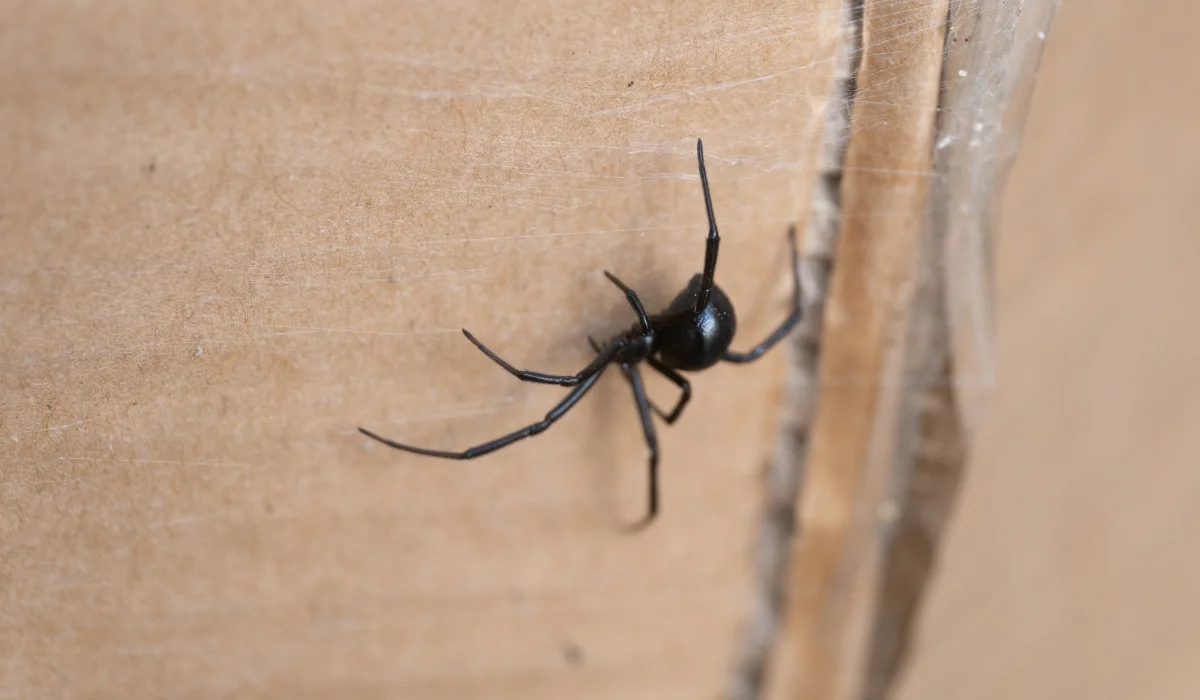
Most spiders found around Arizona homes are not dangerous to people. They help control insects and often stay outdoors unless they find prey, shelter, or an entry point inside the house.
However, a small number of spiders deserve more caution. The two most common venomous spiders in Arizona are the western black widow and the Arizona recluse. Both prefer sheltered areas where they are less likely to be disturbed.
Homeowners do not need to panic after seeing one spider. The safer approach is to identify the signs, avoid handling unfamiliar spiders, reduce hiding places, and request professional help when activity continues.
The University of Arizona Cooperative Extension’s guide to spiders in Arizona explains that most spiders cannot harm people. Only a small number have venom associated with serious reactions.
For Arizona homeowners, the two species that deserve the most attention are:
These spiders do not seek out people. Bites are more likely when a spider is pressed against the skin or disturbed while someone is moving stored materials, cleaning a hidden area, or working around outdoor clutter.
Correct identification matters because many harmless spiders can look alarming at first glance.
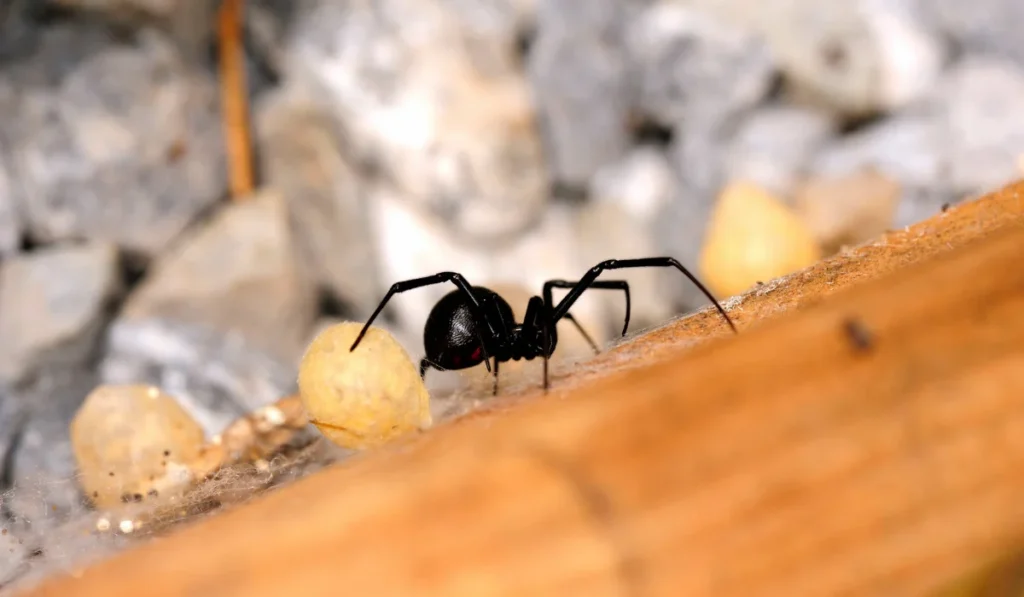
The western black widow is one of the better-known dangerous spiders in Arizona. Mature females are the main concern for homeowners.
The University of Arizona identifies adult female black widows by their shiny black color and the red hourglass pattern on the underside of the abdomen. Males and juveniles may show more orange, red, and white markings along the back and sides.
Banner Health’s black-widow safety guide explains that mature females have a rounded abdomen and often remain close to irregular webs in sheltered locations.
Black widows prefer quiet spaces where insects are available and disturbances are limited.
Check cautiously around:
Do not reach into these areas without looking first. Wear gloves when moving stored objects, rocks, firewood, or yard debris.
Black-widow webs often appear irregular and tangled rather than symmetrical. They may feel stronger than a typical cobweb.
A messy web in a hidden corner does not confirm a black widow, but it provides a reason to inspect the area carefully from a safe distance.
Avoid touching the web or trying to flip the spider over to check for an hourglass marking. Take a photo when possible and request help if you cannot identify the species safely.
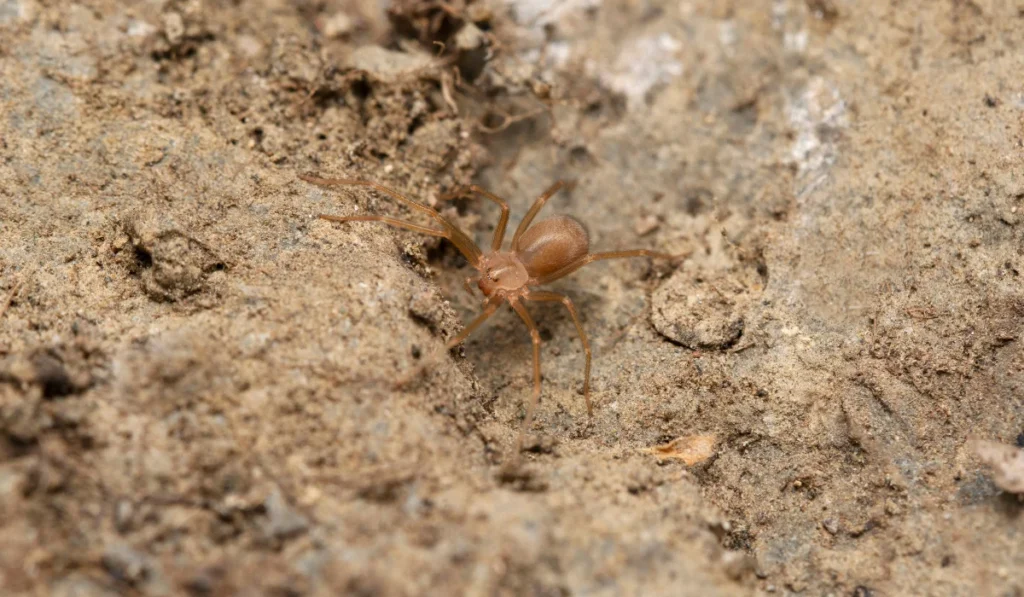
The Arizona recluse is a tan-to-brown spider with a darker marking on the upper body. The marking may resemble a violin, with the narrow end pointing toward the abdomen.
The University of Arizona notes that the eye pattern is also distinctive: Arizona recluses have three pairs of eyes arranged in a semicircle. However, homeowners should not approach closely or use a hand lens on a live spider to confirm this feature.
Banner Health’s Arizona brown-spider guide describes these spiders as small, brown-colored spiders that may have a faint violin-shaped marking.
Recluse spiders favor dry, undisturbed areas. They may shelter in:
Shake out shoes, clothing, towels, and gloves that have been stored in dark spaces. Use caution when moving cardboard boxes or other materials that have remained untouched for an extended period.
The phrase “brown recluse” is often used loosely online, but Arizona homeowners should be careful with identification.
The more locally relevant species is the Arizona recluse. Many brown spiders found in homes are not medically significant, and harmless species can be mistaken for a recluse based on color alone.
Green Home Pest Control’s guide to black widows and recluse spiders in Arizona also emphasizes that common house spiders and wolf spiders may be confused with more concerning species.
A clear photo and a professional inspection can help prevent unnecessary worry and unnecessary pesticide use.
Tarantulas can look intimidating because of their size, but they are not usually the dangerous spiders Arizona homeowners need to worry about most.
A tarantula found outdoors should generally be left alone. Males may wander while searching for females, and one may accidentally enter a garage or home.
Avoid handling a tarantula directly. Some species can release irritating hairs when threatened, and any spider may defend itself if trapped or mishandled.
A large spider is not automatically a more dangerous spider.
Spiders follow food and shelter. A home with active flies, crickets, roaches, ants, or other insects may also attract spiders.
The University of Arizona explains that spiders commonly enter homes in two ways: homeowners bring them inside with boxes, firewood, or stored materials, or the spiders move through cracks and crevices while looking for prey or warmer conditions.
Green Home Pest Control’s Phoenix spider-control page follows the same logic. Its inspection process checks where spiders are active, what attracts them, and which entry points allow them to return.
Inspect:
Sealing these gaps can reduce both spiders and the insects they feed on.
One spider outdoors usually does not indicate an infestation. A pattern of activity deserves more attention.
Look for:
A spider issue may be connected to another pest problem. Addressing the prey population can make the home less attractive to spiders.
A practical prevention plan focuses on entry points, clutter, prey insects, and outdoor hiding places.
Use weatherstripping, door sweeps, screen repairs, and appropriate caulk to close openings around windows, doors, foundations, and utility lines.
Check garages and patio doors carefully. These areas often provide easy access from outdoor spaces.
Organize garages, closets, sheds, and patios. Replace damaged cardboard boxes with sealed bins when possible.
Keep stored items off the floor and avoid leaving piles of paper, fabric, wood, or unused materials in dark corners.
Store firewood away from the home and raise it off the ground. Move rocks, lumber, unused pots, and yard debris away from exterior walls.
These steps make hiding areas easier to inspect and reduce sheltered spaces close to doors and windows.
Spiders remain where food is available. Flies, ants, crickets, and roaches can support recurring spider activity.
Clean food residue, repair leaks, keep trash containers closed, and address insect activity when it continues indoors.
Wear gloves when moving stored materials or working in sheltered outdoor spaces. Check inside shoes, gloves, and towels before using them after storage.
Avoid placing hands into dark cracks, boxes, or irrigation areas without looking first.
No. Treating every spider without identifying the source can lead to unnecessary pesticide use.
The EPA’s integrated pest-management principles recommend identifying the pest, monitoring the activity, removing conditions that support the problem, and using targeted treatment when preventive steps are not enough.
A single spider on an exterior wall may be a harmless predator. Repeated black-widow sightings in a garage require a different response.
Avoid applying outdoor pesticides indoors. Follow the product label exactly when using any pest-control product.
Keep children and pets away from the area. Do not touch the spider or its web.
Take a photo from a safe distance if possible. Note where the spider appeared and whether egg sacs or additional webs are nearby.
Professional support is especially useful when:
Green Home Pest Control’s spider-control process includes inspection, web removal, treatment of cracks and crevices, attention to exterior hiding zones, and follow-up when activity returns.
Do not wait for severe symptoms before asking for guidance after a suspected venomous-spider bite.
For a possible black-widow bite, Banner Health recommends calling the Poison Center immediately at 1-800-222-1222. The center can advise whether home care is appropriate or whether medical treatment is needed.
For a possible Arizona brown-spider bite, Banner Health recommends:
Call 911 for life-threatening symptoms such as difficulty breathing, collapse, or severe illness.
Do not delay medical care while trying to capture or identify the spider.
Professional spider control starts with identification. The technician checks the places where spiders rest, build webs, and find prey.
Green Home Pest Control’s spider-control service in Phoenix includes inspection of eaves, corners, garages, and yard edges. The team maps hiding zones, treats cracks and crevices, removes webs where needed, and provides follow-up support when activity returns.
For homeowners outside Phoenix, the company’s residential pest-control page provides an overview of its Arizona services. Confirm availability for your address when requesting a quote.
A targeted plan can address both the spiders and the conditions allowing them to remain active.
Schedule an inspection when:
The goal is not to eliminate every beneficial outdoor spider. It is to reduce the activity that creates a safety concern inside or close to the home.
Most spiders can be left alone outdoors. Dangerous spiders require a more careful response when they appear inside the home, close to entryways, or in spaces your household uses regularly.
Request a free quote from Green Home Pest Control to confirm service availability and schedule an Arizona spider inspection based on the activity found around your property.
The western black widow and Arizona recluse are the two most common venomous spiders in Arizona. Most other spiders found around homes are harmless or beneficial.
A mature female black widow usually has a shiny black body, rounded abdomen, and red or orange hourglass marking underneath. Do not handle or flip over an unknown spider to inspect it.
Arizona has recluse spiders, including the Arizona recluse. Many brown spiders are misidentified, so color alone is not enough to confirm the species.
No. Many spiders are beneficial predators. Focus on recurring indoor activity, venomous species, egg sacs, and webs in areas used by children or pets.
Call Poison Help at 1-800-222-1222 after a suspected black-widow or Arizona brown-spider bite. Call 911 for life-threatening symptoms.

Serving Arizona since 2012

Pest-free guarantee

Small, local business



"*" indicates required fields