What Phoenix Homeowners Should Know About the Most Painful Sting
Author: Jonathan Anderson

Protect your home and family from ants, spiders, scorpions, rodents, and other Tucson pests.
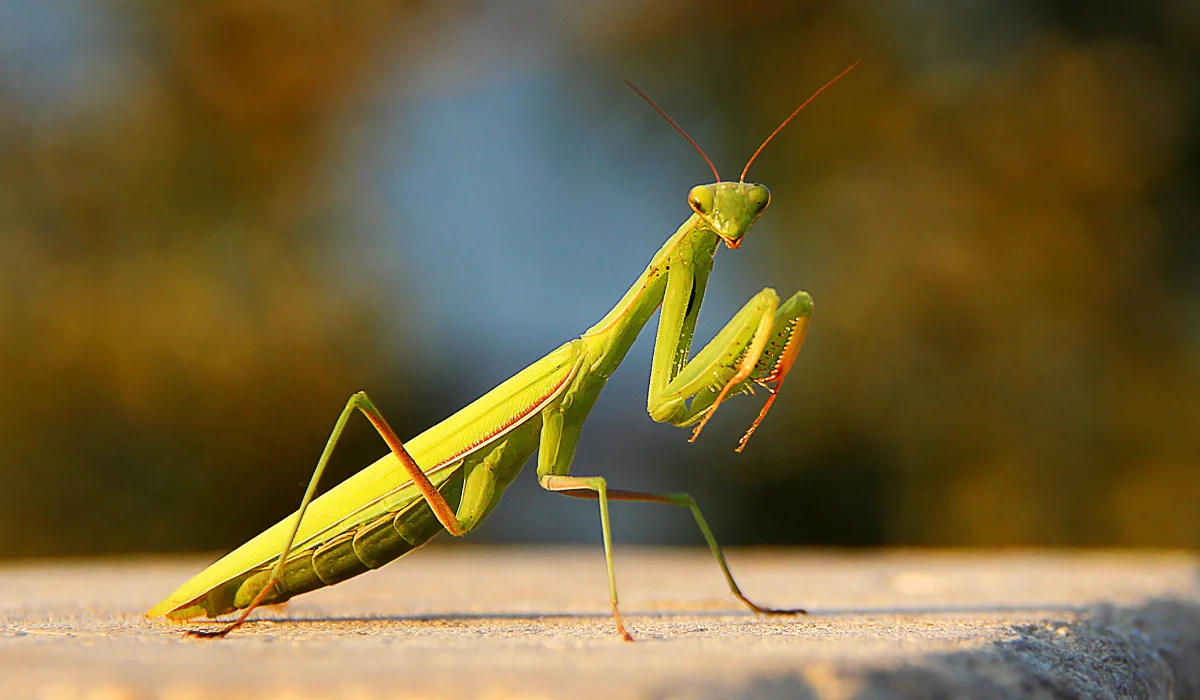
The praying mantis’ life cycle has three main stages: egg case, nymph, and adult. Unlike butterflies, praying mantises do not pass through a caterpillar or pupal stage. Young mantises emerge looking like miniature versions of adults and grow by shedding their outer layer several times.
Phoenix homeowners may notice mantises resting on shrubs, walls, patio plants, or areas near outdoor lights. They can look intimidating because of their folded front legs and quick movements, but a praying mantis found outdoors is usually not a pest problem. These insects prey on other bugs and are generally best left alone.
Praying mantises go through incomplete metamorphosis. This means that the insect develops gradually rather than changing through a separate larval and pupal phase.
The three main stages are:
The University of Arizona Cooperative Extension’s guide, The Praying Mantis: An Intriguing Insect!, describes a seasonal pattern in which young mantises emerge in spring, develop through summer, and produce egg cases in autumn.
The exact timing varies with the species and environmental conditions. However, Phoenix homeowners are most likely to notice mantises during the warmer months when adults and growing nymphs are active outdoors.
A praying mantis begins life inside a protective egg case called an ootheca. The female creates a foamy material that hardens around the eggs and helps protect them until the young mantises emerge.
The University of Arizona’s beneficial insects guide describes praying mantis egg cases as brownish-gray, papery structures with multiple compartments. They may be attached to a twig or branch.
Egg cases can also appear on:
An ootheca may look like a small hardened patch of foam or a textured capsule. It is easy to mistake one for dried plant material, mud, or an abandoned insect nest.
Usually, no. Leave the egg case in place when it is attached to a safe outdoor surface and does not interfere with maintenance.
Avoid spraying it with pesticide or scraping it away simply because it looks unfamiliar. A single egg case may contain multiple young mantises that will disperse after emerging.
If an ootheca is attached to an object that must be moved, such as outdoor furniture or equipment, avoid damaging it. When the situation is unclear, a pest-control professional or local extension resource can help with identification.
When young mantises emerge, they already resemble tiny adults. They have the same triangular head, long body, and folded front legs, but they are smaller and do not have fully developed wings.
The University of Arizona notes that the young emerge in spring. As they grow, they molt by shedding their outer layer. A mantis hanging upside down from a stem or another surface may be preparing to molt or completing the process.
Nymphs begin hunting soon after they emerge. Their prey depends on their size and what is available in the surrounding area.
Praying mantises develop through incomplete metamorphosis. Young nymphs do not pass through a worm-like larval phase. Instead, each molt makes them look progressively more like an adult.
The changes become easier to notice over time:
A homeowner may initially mistake a young mantis for a different insect because of its small size. Looking at the folded front legs and triangular head can help with identification.
By adulthood, the mantis has a more developed body and, depending on the species and sex, functional wings. Adults continue hunting insects and eventually mate.
The University of Arizona’s Backyard Bugs of Arizona guide identifies the Arizona mantis, Stagmomantis limbata, as a local species. The guide notes that it may be found from July through October and can reach up to three inches in length.
Arizona mantises are ambush predators. Rather than chasing prey constantly, they often remain still on a plant or surface and wait for another insect to move within reach.
Their folded front legs are adapted for grabbing prey. Their still posture also helps them blend into vegetation.
Praying mantises are predators that eat other insects. The University of Arizona includes them among beneficial bugs because they can feed on insects found in gardens and outdoor areas.
You may see a mantis waiting on:
Lights can draw insects at night, which may also attract predators looking for prey.
However, mantises are generalist predators. They do not target only household pests. They may eat insects that homeowners consider unwanted, but they can also catch other insects in the yard.
For that reason, a mantis should not be treated as a replacement for a targeted pest-control plan when a home has an infestation.
Praying mantises do not sting. They are not known for seeking out people or attacking homeowners.
A mantis may raise its front legs or shift into a defensive posture when it feels threatened. Larger mantises may try to defend themselves if handled roughly.
The simplest approach is to leave the insect alone outdoors. Avoid picking it up unnecessarily, especially when children or pets are nearby.
A mantis on a patio plant, wall, or shrub usually moves on without intervention.
A mantis may enter a home accidentally through an open door, damaged screen, or another small opening. It may also follow insects attracted to lights near a doorway or window.
One mantis indoors does not usually suggest an infestation. Praying mantises do not typically establish household colonies in kitchens, bathrooms, or wall voids.
If you notice recurring indoor insects, check:
Repairing obvious gaps can help reduce accidental entry by mantises and other insects.
Homeowners sometimes notice an unfamiliar structure on a plant, fence, or patio surface and assume it belongs to a stinging insect.
A praying mantis egg case is usually compact and hardened. It may look foamy, papery, ridged, or brownish-gray depending on the species and age of the structure.
A wasp nest has a different appearance and may have active insects flying to and from it. Avoid approaching or touching a structure when you cannot identify it safely.
Take a photo from a reasonable distance and request professional help when:
Introducing mantises into a yard is not a precise way to control a specific pest. Mantises are broad predators, and their behavior is difficult to direct.
They may disperse after emerging, and they do not limit their hunting to mosquitoes, flies, or other nuisance insects. A targeted pest issue still requires identification and source control.
For example:
A mantis can be an interesting part of the outdoor ecosystem without serving as a complete pest-management strategy.
A Phoenix yard can support beneficial predators without turning into an unmanaged space.
Start with simple habits:
The goal is to avoid eliminating helpful insects while addressing the pests that can affect the home.
A praying mantis outdoors rarely requires professional treatment. However, a pest inspection makes sense when the insect is not the real issue.
Schedule an inspection when:
Green Home Pest Control provides residential pest-control services in Phoenix that begin with an inspection of the property and the areas where pest activity is occurring.
The goal is to identify the actual pest and address the source rather than treating beneficial insects unnecessarily.
A praying mantis in the yard is usually a helpful predator, not a reason to spray. If recurring indoor insects, entry-point problems, or an unidentified nest are causing concern, a closer inspection can clarify the next step.
Request a free quote from Green Home Pest Control to schedule a Phoenix pest inspection and receive recommendations based on the activity found around your home.
The three main stages are egg case, nymph, and adult. The egg case is called an ootheca. Young mantises emerge looking like small versions of adults.
A praying mantis egg case often looks like a small hardened patch of foam or papery material. It may be brown, gray, or tan and attached to a twig, plant stem, fence, or outdoor surface.
The University of Arizona lists the Arizona mantis as an insect commonly found from July through October. Timing can vary by species and local conditions.
Praying mantises are predators that eat other insects. They can be part of a healthy outdoor ecosystem, although they do not target only nuisance pests.
Usually not. A mantis outdoors can generally be left alone. Contact a pest-control professional when you need help identifying an insect, an active nest, or recurring pest activity around the home.

Serving Arizona since 2012

Pest-free guarantee

Small, local business



"*" indicates required fields