What Phoenix Homeowners Should Know About the Most Painful Sting
Author: Jonathan Anderson

Protect your home and family from ants, spiders, scorpions, rodents, and other Tucson pests.
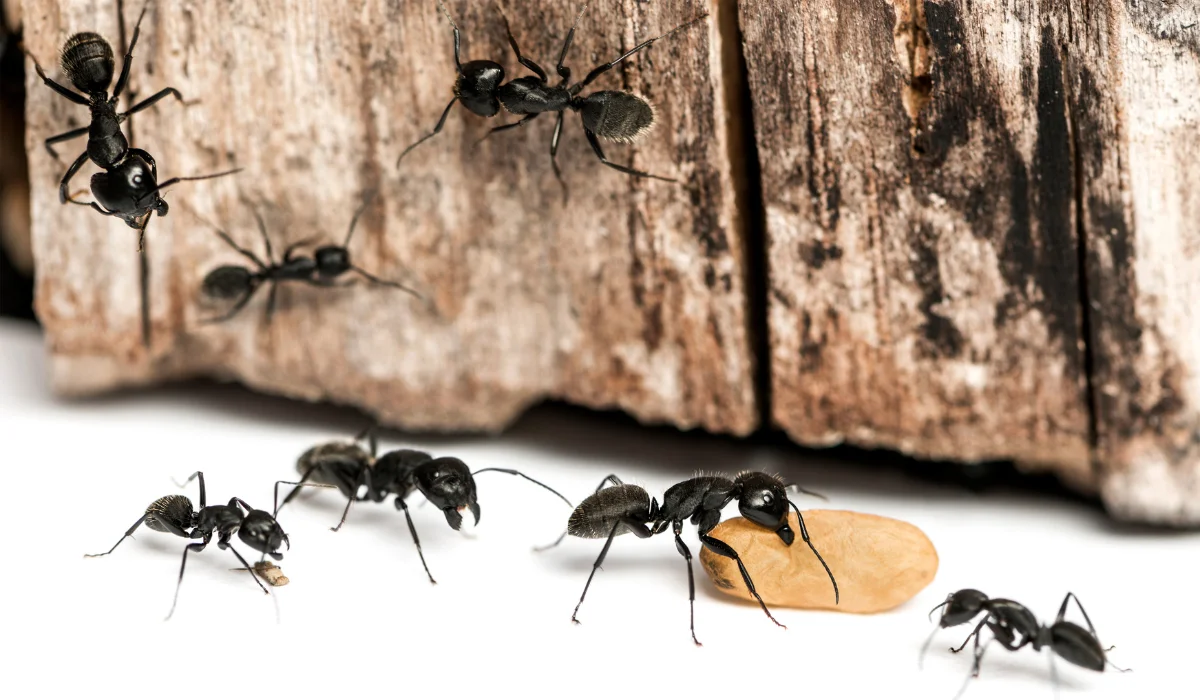
Carpenter ants do not eat wood. They excavate it to create nesting areas, leaving behind smooth tunnels inside wooden structures. The most common signs of carpenter ant damage include sawdust-like debris near wood, recurring ant activity after dark, winged ants indoors, and moisture problems near doors, windows, or plumbing fixtures.
A few ants crossing a patio may not indicate a nest inside your home. However, repeated activity near the same area deserves attention. Early identification can help you address the colony and any moisture issue that may be making the property more attractive to ants.
The University of Arizona’s Community Integrated Pest Management guidance explains that carpenter ants hollow out wood to create clean, smooth tunnels. Damage often develops in hidden areas, so the first clue may appear outside the nest.
Homeowners should pay attention to patterns. A single ant near an open door is different from repeated activity around a window frame, baseboard, or damp wall.
Carpenter ants may leave small piles of debris beneath a nesting area. This material can resemble sawdust or wood shavings. It may collect near:
Debris alone does not confirm a carpenter ant problem. Wood-boring insects and maintenance work can produce similar material. However, fresh debris that reappears after cleaning is worth investigating.
Carpenter ants create galleries as they remove wood for nesting space. These tunnels tend to look relatively smooth and clean. The damage may remain hidden inside a frame, wall void, or wooden feature until the area is opened during repairs.
Avoid removing trim or opening walls without a clear reason. Start by documenting where you see ants or debris and arrange an inspection if the signs continue.
Carpenter ants are among the larger ant species found in Arizona. Regular sightings after dark can be especially useful because carpenter ants often forage at night.
Check areas where ants may find food or moisture, including kitchens, bathrooms, laundry rooms, garages, patios, and exterior walls. A trail leading toward a crack, door frame, or utility opening may help identify an entry point.
Green Home Pest Control’s guide to carpenter ant activity on Phoenix properties also notes that these ants may travel in search of water and food sources such as sweets, plant juices, and insects.
Winged ants may appear when a colony is reproducing. They can be mistaken for winged termites, particularly when both insects appear around the same time of year.
Finding winged insects indoors near windows, doors, or light sources does not automatically identify the pest. Save a photo or a specimen when possible and request an inspection. Accurate identification matters because carpenter ant control and termite control require different approaches.
Phoenix homes can still develop localized moisture problems despite the region’s dry climate. A leaking pipe, irrigation issue, damaged seal, or poorly ventilated space may create a damp area that attracts ants.
Inspect the area around:
Fixing a leak will not remove an established colony, but it can reduce the conditions that make the area attractive.
Carpenter ants and termites can both be associated with wood damage, but they affect wood differently. Carpenter ants excavate wood to create nesting galleries. Termites consume cellulose as a food source.
Visible insect activity can offer clues. Ants have a narrow waist and bent antennae, while termites have a broader body shape and straighter antennae. Winged insects can be harder to distinguish without a close look.
Mud tubes are more commonly associated with subterranean termites. Green Home Pest Control’s guide to signs of termites in Phoenix homes explains additional warning signs, including swarmers, frass, and wood damage.
Avoid assuming that sawdust-like debris always indicates carpenter ants or that wood damage always points to termites. An inspection can help confirm the pest before treatment begins.
Carpenter ant activity may start outdoors and move closer to the structure as ants look for food, moisture, or nesting areas. Walk around the property and check the places where wood and water are present.
Look at wood fencing, posts, tree stumps, stored firewood, patio features, and damaged trim. Move firewood away from the house and keep it raised off the ground when possible.
Trim vegetation that touches the structure. This reduces potential pathways and makes it easier to notice ant trails near the foundation.
Inspect gaps around windows, door frames, pipe penetrations, and utility lines. Damaged seals and small cracks can provide access to hidden spaces.
Sealing obvious gaps can support prevention, but wait until active trails have been evaluated. Closing one entry point may redirect ants without addressing the nest.
Indoor activity often appears where ants can reach moisture or food. Check under sinks, near appliances, around pet bowls, and along baseboards. In garages, inspect wooden shelving, cardboard storage areas, and walls near exterior doors.
The University of Arizona offers additional home pest identification resources for residents who want help recognizing common household pests.
Start by tracking what you see. Take photos of ants, winged insects, damaged wood, and debris piles. Note where the activity appears and whether it becomes more noticeable after sunset.
Then address conditions that may support the problem:
Avoid relying on a surface spray as the only response. Killing visible ants may reduce activity temporarily without reaching the nest. Carpenter ant colonies can be difficult to locate because the ants may travel between outdoor nesting sites and indoor areas.
A targeted inspection can help determine whether the activity comes from carpenter ants, another ant species, or termites. Green Home Pest Control provides ant control services in Phoenix that begin with an inspection of the yard, foundation, and problem areas inside the home.
The service plan may include targeted baits and exterior perimeter treatment in the areas where ants travel or nest. The team also checks entry points, cracks, food sources, and moisture conditions that may contribute to recurring activity.
This approach focuses on the source of the problem rather than the ants that happen to be visible on a countertop or patio.
Recurring ant activity, sawdust-like debris, or winged ants indoors can be difficult to evaluate without a closer look. Green Home Pest Control serves Phoenix homes with inspection-based ant control and follow-up options based on the property’s needs.
Request a free quote to schedule an inspection and get a clearer picture of what is happening inside and around your home.
No. Carpenter ants remove wood to create nesting galleries. Termites consume wood as a food source, which is one reason accurate identification matters.
Sawdust-like debris near wooden surfaces is one of the most recognizable signs. Homeowners may also notice large ants after dark, winged ants indoors, or repeated activity near damp areas.
Yes. Carpenter ants can damage wooden structures when they build nests inside them. The extent of the damage depends on the location of the nest and how long the activity continues.
No. The pests behave differently and require different treatment plans. A professional inspection can help confirm which insect is present before treatment begins.
An occasional outdoor ant may not indicate a serious problem. Repeated indoor sightings, nighttime activity, debris piles, or winged ants are stronger reasons to request an inspection.

Serving Arizona since 2012

Pest-free guarantee

Small, local business



"*" indicates required fields